Introduction
Share incentive plans have become an important part of compensation strategies for US businesses seeking to attract talent, retain employees, and connect employee rewards with long-term company performance. By offering stock options, restricted stock units (RSUs), employee stock purchase plans (ESPPs), or other equity-based benefits, companies can give employees an opportunity to participate in potential business growth.
However, implementing share incentive plans requires more than deciding how many shares to offer. Employers must select an appropriate structure, understand securities regulations, evaluate tax consequences, establish clear vesting rules, and communicate the risks and benefits to employees.
In 2026, businesses should also consider workforce expectations, financial reporting, corporate governance, and the administrative requirements of managing equity awards. The right approach depends on the company’s size, ownership structure, stage of development, and compensation objectives.
This guide explores best practices for implementing share incentive plans in the United States, with practical recommendations for startups, private companies, and established businesses.
What Is a Share Incentive Plan?
A share incentive plan is a compensation arrangement that gives employees shares, the right to purchase shares, or another award linked to company stock. These arrangements can reward performance, encourage employees to remain with the business, and provide a potential financial benefit if the company grows in value.
In the United States, the term is broad rather than the name of one standardized legal plan. Common structures include:
- Stock options: Give employees the right to purchase shares at a specified exercise price.
- Restricted stock units (RSUs): Generally promise shares or their cash equivalent after specified vesting and settlement conditions are met.
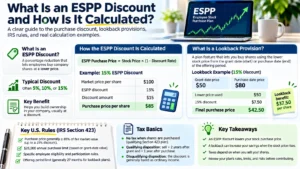
- Employee stock purchase plans (ESPPs): Allow eligible employees to purchase company stock, often through payroll deductions.
- Employee stock ownership plans (ESOPs): Qualified retirement plans designed to invest primarily in employer stock.
These arrangements are not interchangeable. An ESOP, for example, is a retirement plan with specific federal requirements, whereas stock options and RSUs are commonly used as equity compensation awards.
Companies should begin by defining what they want their plan to accomplish before choosing a structure.
1. Define Clear Business Objectives
The first best practice is to establish measurable objectives for the share incentive plan.
A company may want to reduce employee turnover, recruit specialized talent, reward senior executives, encourage long-term performance, or facilitate a business succession transaction. Each objective may require a different approach.
For example, a startup competing for experienced software engineers might use stock options to offer potential upside without paying all compensation in cash. A public company may use RSUs to provide a more predictable number of shares, subject to the company’s stock price at settlement.
A business considering an employee stock ownership plan for succession purposes will need a substantially different design and implementation process.
Before selecting an award type, document:
- The business problem the plan is intended to solve.
- The employees or employee groups eligible to participate.
- The expected duration of the incentive.
- The company’s available equity and cash resources.
- The performance and retention outcomes management wants to measure.
Clear objectives make it easier to evaluate whether the plan is effective after implementation.
2. Choose the Right Equity Structure
The second step is choosing an award type that fits the company’s financial position, ownership structure, and workforce.
| Plan type | Common purpose | Key consideration |
| Stock options | Offer potential upside tied to share-price growth | Employees generally pay an exercise price to acquire shares |
| RSUs | Provide equity-based compensation linked to service or performance | Vesting and settlement can trigger tax obligations |
| ESPPs | Enable eligible employees to buy company stock | Plan design and tax treatment affect employee outcomes |
| ESOPs | Provide a qualified retirement benefit invested primarily in employer stock | Requires specialized retirement-plan administration and compliance |
Private companies commonly consider stock options, while public companies may use RSUs and stock options in broader compensation programs. An ESPP may be suitable for companies that want employees to purchase shares through payroll deductions.
The decision should reflect employee needs as well as employer objectives. An award with attractive theoretical value may be less useful if employees cannot understand its terms, cannot afford to exercise options, or have no practical way to sell private-company shares.
For retirement-plan ESOPs, the IRS overview of employee stock ownership plans explains the separate legal framework that applies.
3. Understand US Securities Law Requirements
Equity awards involve securities, so companies must determine which securities-law requirements apply before making grants.
For many eligible private, non-reporting US companies, SEC Rule 701 provides an exemption from securities registration for certain compensatory securities offers and sales to employees, consultants, and advisers under qualifying written arrangements. It is not a blanket exemption for every company or every type of recipient.
Rule 701 has limits and conditions. Under the SEC’s published guidance, companies that exceed the applicable $10 million threshold for securities sold under the rule during a consecutive 12-month period must provide specified financial and other disclosures to recipients, subject to the rule’s requirements. The relevant calculation and timing should be reviewed carefully.
Rule 701 securities are generally restricted securities, which means employees cannot automatically assume they may sell their shares freely.
Public companies and businesses that do not qualify for Rule 701 need to assess other applicable securities-law pathways. Companies must also consider relevant state securities laws, corporate approvals, and applicable anti-fraud requirements.
Review the SEC’s Rule 701 guidance and its Corporation Finance interpretations.
Best practice: Have securities counsel confirm the applicable exemption, eligibility rules, disclosure obligations, and grant documentation before issuing awards. Reassess compliance as the company grows or changes its reporting status.
4. Establish a Defensible Stock Valuation
A share incentive plan needs a reliable process for determining stock value, particularly when awards are granted by a private company.
A publicly traded company’s stock price is generally observable, although companies must still follow their compensation policies and applicable accounting and tax rules.
Private companies do not have a continuously quoted public market price. They may need an independent valuation or other appropriate valuation analysis to support the fair market value of their shares.
A valuation process should consider factors such as:
- Revenue, earnings, and cash flow.
- Recent financing rounds or transactions.
- The company’s financial projections.
- Market and industry conditions.
- Capital structure and share rights.
- Relevant business risks.
For certain private-company stock options, the valuation also matters for Section 409A tax compliance. Stock options generally need to satisfy applicable requirements for the exercise price and other terms to avoid adverse tax consequences.
A company should not automatically treat its latest fundraising price as the correct value for every employee award. Different share classes may have different rights, and the valuation for common stock can differ from the price investors pay for preferred stock.
Best practice: Establish a documented valuation policy, maintain supporting records, and work with qualified tax and valuation professionals. Review the valuation process when significant events occur, such as a financing round, acquisition offer, or material change in company performance.
5. Design Fair and Understandable Vesting Rules
Vesting determines when an employee earns the right to retain an award or receive shares under its terms.
A common stock-option or RSU structure uses a four-year vesting schedule, sometimes with a one-year cliff. Under a simplified example, an employee may receive no vested award during the first year and then vest in portions over the remaining schedule.
However, a four-year schedule is not mandatory for every plan. The appropriate design depends on the company’s retention goals, job types, award structure, and market practices.
Companies should clearly define:
- The vesting commencement date.
- Any cliff or milestone requirements.
- The vesting frequency.
- Treatment of leave, termination, death, or disability.
- The impact of a merger or acquisition.
- Post-termination exercise periods for options.
- Whether performance-based conditions apply.
Vesting terms should be included in the written plan and individual award agreement. Employees should be able to understand what they must do to earn an award and what happens if employment ends.
Avoid overly complicated conditions that employees and managers struggle to interpret. Clear terms reduce misunderstandings and help HR teams administer awards consistently.
6. Plan for Tax Consequences
Tax planning is one of the most important parts of implementing a share incentive plan. Different equity awards can trigger taxes at different stages, and an employee’s actual result depends on the award type, timing, and individual circumstances.
Stock options
Incentive stock options (ISOs) and nonqualified stock options (NSOs) follow different tax rules. ISOs may qualify for special treatment if applicable statutory conditions and holding-period requirements are met, although exercising them can create alternative minimum tax considerations.
NSOs commonly create ordinary compensation income when exercised, measured using the applicable fair market value and exercise price, subject to the governing tax rules.
Restricted stock units
RSUs generally create ordinary compensation income when shares are delivered at settlement. Employers should coordinate payroll withholding, tax reporting, and employee communications.
Employee stock purchase plans
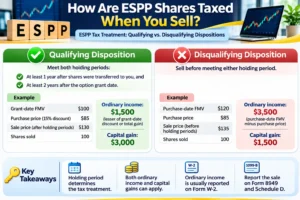
Qualifying Section 423 ESPPs have specific tax and holding-period rules. The treatment when shares are sold depends on whether the relevant statutory holding periods are satisfied.
The IRS explains these distinctions in Topic No. 427: Stock Options, its stock and ESPP FAQs, and Publication 525.
Best practice: Create a tax review process before granting awards. Coordinate HR, payroll, finance, legal counsel, and tax advisers so that grant records, exercise transactions, vesting events, withholding, and year-end reporting are handled correctly.
Do not promise employees a particular tax outcome. Provide general information and direct employees to qualified tax professionals for individual advice.
7. Address Accounting and Financial Reporting
Companies must also evaluate how equity compensation affects their financial statements.
For businesses reporting under US Generally Accepted Accounting Principles (US GAAP), share-based compensation is generally addressed by the Financial Accounting Standards Board’s Accounting Standards Codification Topic 718.
Accounting treatment may involve recognizing compensation expense over an award’s requisite service period and estimating the fair value of awards using appropriate methods. The exact treatment depends on the award terms, classification, vesting conditions, and other accounting considerations.
Companies should establish procedures for:
- Recording approved grants.
- Determining grant-date fair value where required.
- Tracking vesting and forfeitures.
- Accounting for modifications and cancellations.
- Reconciling equity records with payroll and financial reporting.
- Preparing required disclosures.
A business should not wait until year-end to assess the accounting impact of grants. A documented process makes reporting more reliable and reduces the risk of errors.
Finance teams should coordinate with the company’s external accountant or auditor to confirm the appropriate treatment.
8. Communicate the Plan Clearly to Employees
Even a technically sound plan can fail if employees do not understand it.
Employees need to know what they are receiving, what conditions apply, when awards vest, what taxes may arise, and whether they can sell the shares. They should also understand that equity value can increase or decrease and that private-company shares may be illiquid.
A useful employee communication package includes:
- A plain-language plan summary.
- The individual award agreement.
- A vesting schedule.
- An explanation of exercise prices and deadlines, where relevant.
- A summary of tax considerations.
- Instructions for viewing awards and reporting changes.
- A contact point for administrative questions.
Use realistic examples to explain potential outcomes. Avoid describing unvested awards or private-company options as guaranteed cash or guaranteed wealth.
Companies should also explain dilution. When a business issues additional shares, an existing shareholder’s ownership percentage may decline. The financial impact depends on the company’s valuation, capital structure, and future performance.
Good communication builds trust and allows employees to make more informed decisions.
9. Use Reliable Equity Administration Systems
As a company grows, spreadsheets alone may become difficult to manage. Equity administration software or a controlled internal system can help track grants, vesting, exercises, cancellations, share balances, and required approvals.
The system should have clear ownership and access controls. Sensitive compensation information should be available only to authorized personnel.
Recommended controls include:
- Documenting board or committee approvals.
- Reconciling grants against the approved share pool.
- Maintaining signed award agreements.
- Tracking employee status and termination dates.
- Reviewing exercise deadlines and tax reporting.
- Restricting access to confidential equity records.
- Maintaining an audit trail of changes.
A software platform does not ensure compliance by itself. The company still needs accurate source data, defined approval processes, and periodic reviews by qualified personnel.
10. Review Plan Performance Regularly
Implementation is not the end of the process. Companies should review whether the plan is achieving its business objectives and whether its costs remain appropriate.
Useful measures include employee retention, acceptance rates for compensation offers, employee understanding of awards, administrative error rates, and the relationship between equity compensation and overall compensation costs.
For example, if the company introduced equity awards to reduce turnover among key employees, management should examine retention trends over time rather than assuming the plan worked simply because awards were granted.
Reviews should also consider changes in the company’s valuation, available share pool, workforce, capital structure, and regulatory environment.
Companies in regulated sectors may have additional governance requirements. For example, federal banking regulators emphasize that incentive compensation should balance risk and reward and be supported by effective controls and governance. See the Federal Reserve’s guidance on sound incentive compensation policies.
Common Mistakes to Avoid
When implementing share incentive plans, companies should avoid these common mistakes:
- Choosing a plan before defining its business objectives.
- Using unsupported stock valuations.
- Issuing awards without appropriate approvals.
- Overlooking securities-law exemptions and disclosure obligations.
- Ignoring tax withholding and reporting requirements.
- Using confusing or inconsistent vesting terms.
- Failing to explain liquidity restrictions and dilution.
- Managing grants without reliable records or access controls.
- Treating equity awards as guaranteed financial benefits.
- Failing to review whether the plan is meeting its objectives.
A careful implementation process can reduce these risks and make the plan easier to manage over time.
Frequently Asked Questions
What is the best share incentive plan for a US startup?
There is no universal best plan. Stock options may suit some private startups, while RSUs or other awards may be appropriate in different circumstances. The choice depends on valuation, tax considerations, financing plans, employee needs, and legal requirements.
Are share incentive plans taxable in the USA?
They can be. The timing and amount of tax depend on the award structure and applicable federal and state rules. Options, RSUs, ESPPs, and ESOPs can have different tax consequences.
Does SEC Rule 701 apply to every company?
No. Rule 701 is generally available to qualifying non-reporting companies for certain compensatory securities offers and sales. Companies must review the rule’s eligibility conditions, limits, and disclosure requirements.
How long should a share incentive plan vest?
The vesting schedule should reflect the company’s goals and the award structure. Four-year schedules are common in some equity compensation programs, but they are not required for every plan. The terms should be clearly documented and legally reviewed.
Should small businesses implement equity compensation in 2026?
Equity compensation may help small businesses recruit and retain employees, but it requires planning, administration, and compliance. A company should evaluate its financial position, ownership structure, employee needs, and professional advisory costs before proceeding.
Conclusion
Implementing share incentive plans in 2026 requires a combination of sound compensation design, legal compliance, tax planning, reliable valuation, and clear employee communication.
US companies should begin with measurable business objectives, select an appropriate award structure, review securities-law requirements, and establish defensible valuation and vesting policies. They should also coordinate tax reporting, financial accounting, equity administration, and periodic plan reviews.
The best plan is not necessarily the one that offers the largest number of shares. It is the one that supports the company’s goals, gives employees understandable and appropriately documented benefits, and can be administered responsibly over time.
Disclaimer: This article is for general educational purposes only and does not constitute legal, tax, accounting, investment, or financial advice. Securities and tax requirements depend on the company, award structure, and individual circumstances. Consult qualified legal, tax, accounting, and valuation professionals before implementing a share incentive plan.